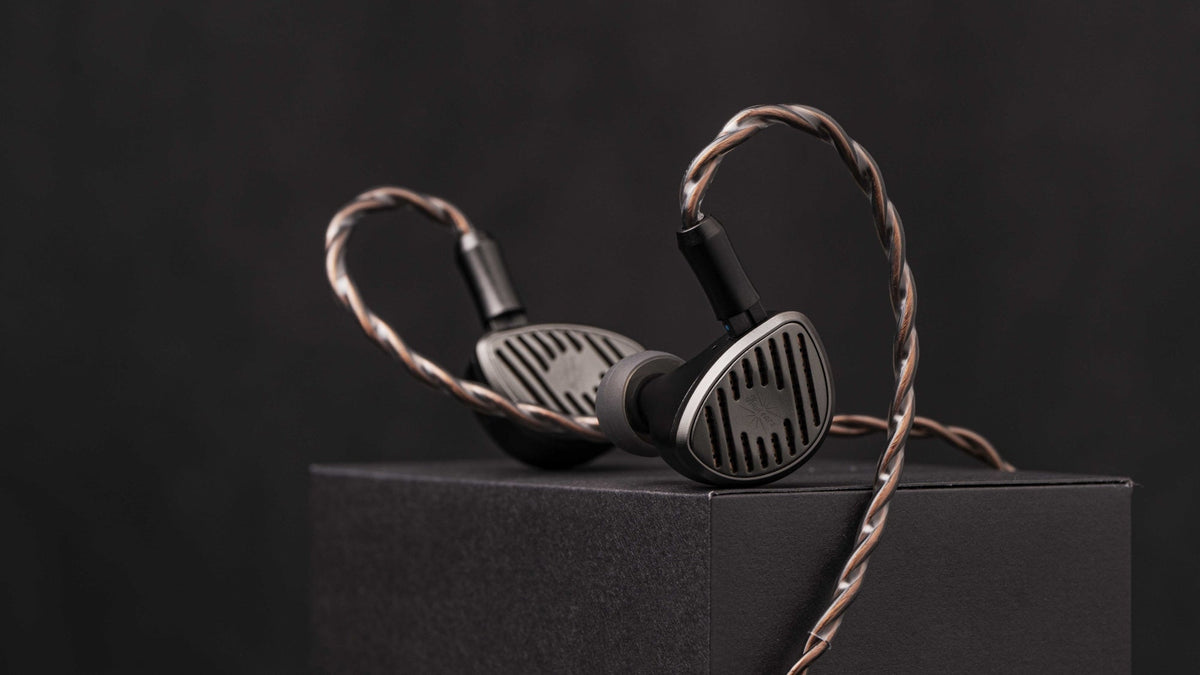
A flagship IEM should represent a complete design idea, not simply the largest number of drivers or the most exotic materials. At premium prices, buyers should expect careful acoustic integration, refined tuning, consistent manufacturing, thoughtful fit, durable serviceable parts, and a clear reason the product exists. The evaluation must become stricter as the price rises because small improvements are expensive and specialization becomes more common.
A flagship earns its place through coherence, refinement, repeatability, and a distinctive experience that remains valuable after the novelty fades.
Identify the design brief
Before judging performance, ask what the product is trying to achieve. Is it a neutral monitor, a bass specialist, a spacious open design, a vocal reference, or a technical showcase? A flagship should be evaluated against its own stated goal and the needs of its intended listener.
A deliberate basshead model should not be criticized merely for having more bass than a neutral target, but it should still preserve midrange intelligibility, control, and long-session usability within that goal.
Coherence matters more as complexity rises
Premium IEMs often combine many drivers, acoustic paths, and crossover sections. Listen for whether the spectrum behaves as one system. Bass attack and midrange body should connect naturally; treble detail should not feel detached; spatial cues should remain stable as frequency changes.
Use sweeps cautiously, then confirm with music. A coherent product maintains instrument identity across its range rather than presenting separate bass, mid, and treble personalities.
Look for refinement at normal volume
A flagship should not need high volume to sound complete. Check low-level bass texture, vocal nuance, decay, ambience, and micro-dynamic changes at a comfortable level. Treble should reveal information without creating a permanent spotlight.
Matched-level comparison is essential because slightly louder playback often sounds more detailed and exciting. The expensive model should distinguish itself through control and completeness, not loudness.
Fit, service, and consistency are part of flagship value
Large multi-driver shells can limit compatibility. Evaluate nozzle size, shell depth, weight, venting, pressure, cable hardware, and long-session comfort. A premium universal IEM should include enough tip variety to support realistic fitting, while custom versions require clear impression and refit procedures.
Check warranty, repair process, connector standard, replacement cable availability, filter maintenance, and quality-control policy. Premium ownership continues after the first listening session.
Demand clear evidence for technical claims
Driver count, exotic transducers, ultra-high frequency extension, and aerospace materials need context. Ask how the drivers are allocated, what the crossover does, how response was measured, and which claim is audible. A flagship page should explain the mechanism without implying that technology alone guarantees superiority.
Measurements can reveal frequency response, channel matching, impedance, distortion, and sensitivity under stated conditions. Listening establishes whether the design goal works for the user. Both forms of evidence are useful; neither should be replaced by price prestige.
Judge value by long-term use, not component cost
The material cost of drivers does not directly define value. The buyer pays for development, acoustic integration, manufacturing consistency, finishing, accessories, service, and the resulting experience. Compare the flagship against a strong midrange reference and identify the improvements without looking at the price.
Then ask whether those improvements matter enough for your listening time, library, and budget. Diminishing returns are real, but so is the value of a highly specialized product to the right listener.
- The design goal is clear and audible
- The drivers behave as one coherent system
- Refinement remains obvious at moderate volume
- Fit works for the full intended session
- Measurements and claims use clear conditions
- Warranty and service match the investment
- The improvement over a reference model is explainable
Kiwi Ears product references
These products are used only as concrete examples of architectures, tuning goals, and ownership considerations. They are not a ranked recommendation list. Verify current specifications, pricing, availability, and approved product language before publishing.

Ten-balanced-armature reference IEM with four-way crossover and modular cable
$349.00
Product highlights
- 10 Balanced Armatures — All-BA · studio clarity
- Forward Vocals — Clean, natural midrange
- Airy Highs — Detailed, lively, never harsh
- BA Sub-bass — Real weight and thump
- Transparent Acrylic — Resonance-tuned housing
- Complete Isolation — Block out the world

Five-driver tribrid IEM with 10 mm dynamic, two Knowles BAs
$449.00
Product highlights
- Tuned by HBB — Signature bass tuning
- Tribrid · 5 Drivers — 1DD + 2BA + 2EST
- 15dB Sub-bass — Deep, dense, physical
- Knowles Mids — Dual 32257 BAs
- Sonion EST Treble — Smooth, extended
- Controlled Power — Balanced much of the time

Seven-driver open-back quadbrid IEM with dynamic, BA, planar
$269.00
Product highlights
- 7 Drivers · 4 Types — DD + 4BA + Planar + PZT
- 5-Way Crossover — Precise frequency separation
- Neutral-bright — Clear vocals, forward treble
- Wide Soundstage — Open-back-like stage
- Strong Microdynamics — Subtle textures shine
- Beefy Bass — Impact with clarity

Product highlights
- DLC Dynamic — Fast, impactful sub-bass
- Dual Knowles BA — Natural, resolving mids
- Planar Driver — Speed and detail
- PZT Bone Conductor — Sparkle and air
- Coherent U — Lively, non-fatiguing
- Studio Resolution — Punches above its price
Frequently asked questions
How many drivers should a flagship have?
There is no correct number. The architecture should serve the design goal, integrate coherently, and deliver measurable and audible benefits.
Are flagship IEMs good for every genre?
Not necessarily. Premium products can be highly specialized. Judge the tuning and trade-offs against your library and use.
How should I compare a flagship to a midrange IEM?
Level-match, use the same source and tips, compare over several sessions, and write down specific differences before checking the price.
Sources and editorial notes
This is a base editorial draft prepared for internal revision. General principles are supported by the sources below. Product examples link to current official Kiwi Ears pages and should be rechecked immediately before publication.
- AES: Statistical Model of In-Ear Headphone Preference (opens in a new tab)
- Audio Precision: Headphone Electroacoustic Measurements (opens in a new tab)
- Knowles: Multi-Way Balanced Armature Driver Design (opens in a new tab)
- Official product page: Kiwi Ears Orchestra II (opens in a new tab)
- Official product page: Kiwi Ears x HBB Punch (opens in a new tab)
- Official product page: Kiwi Ears Septet (opens in a new tab)
- Official product page: Kiwi Ears Quintet (opens in a new tab)


